Posts

Showing posts with the label Rescues

The Emotional Journey of Rescue Animals

Image
Rescue animals come from many different backgrounds. Some have experienced neglect, abandonment, abuse, or life on the streets. Others may have been surrendered by families who could no longer care for them. While every animal's story is different, many people wonder whether rescue animals carry emotional scars from their past and how those experiences affect them in their new homes. Through intuitive communication, I have found that rescue animals often focus much more on the present than humans expect. While some animals may remember difficult experiences, they do not always define themselves by what happened to them. Many are more interested in understanding their current environment, building trust, and creating new relationships than revisiting their past. One common misconception is that all behavioural challenges in rescue animals are the result of trauma. While past experiences can certainly influence behaviour, factors such as personality, breed tendencies, health conditio...

Community Animals, on their own Terms

Image
Community animals have their own rhythm. They are not waiting to be trained, fixed, or integrated into a human structure. They are already living within a system that works for them. What often creates friction is when we try to relate to them in the same way we relate to animals within our homes. We look for consistency. We look for response. We look for a certain kind of interaction. But community animals do not operate within those expectations. Some days they come close. Some days they don’t. Sometimes they accept food. Sometimes they walk away. The interaction is not guaranteed, and it is not meant to be. Understanding this changes how we show up. Instead of trying to build control, the focus shifts to building familiarity. Being present without expecting engagement. Allowing the interaction to be on their terms. This also changes how communication is approached. It is less about asking and more about noticing. Less about directing and more about allowing. The animal chooses wheth...

Animals are Not an extention of Us

Image
Living with animals has slowly changed how I see relationships. Not just with them, but in general. It’s easy to relate to animals through our own emotions. We interpret their actions through what we feel. We look for meaning that fits our experience. We assume connection means they are responding to us in the way we understand connection. Over time, I’ve had to unlearn some of this. Animals are not here to reflect us back to ourselves. They are not tools for healing, symbols to decode, or extensions of our emotional world. They are participants in their own lives, with their own preferences, boundaries, and ways of engaging. This becomes more visible in everyday moments. There are times when they choose not to engage. Times when they walk away. Times when they do not respond in the way we expect. Earlier, I would try to understand what it meant or what I needed to do differently. Now, I see it more simply. They are making a choice. Respecting that choice has changed how I relate to th...

Dignity within Community

Image
When we walk past community animals on our streets, we often feel an immediate urge to rescue. We see vulnerability. We see exposure. We see risk. What we do not always see is structure. Many community animals are not lost. They are part of a functioning social system that we may not fully understand. When we observe more closely, we begin to notice patterns. Dogs who live on the same stretch of road often know each other well. They have territories. They have feeding spots. They understand which humans are safe. They form loose packs or small alliances. There is order in what appears chaotic to us. As we practice intuitive animal communication, we learn to separate our emotional reaction from the animal’s lived reality. Not every community animal is asking to be relocated. Not every animal is seeking adoption. Some are seeking food. Some are seeking medical care. Some are simply seeking respectful coexistence. When we project a savior narrative onto every street animal, we risk overlo...

Why Community and Rescued Animals Don’t Rush Healing

Image
When we work with community animals and rescued animals, one pattern becomes very clear. They do not rush their process. Healing, adjustment, trust, and safety unfold at a pace that makes sense to their nervous system, not to human timelines. As humans, we often struggle with this. We want improvement. We want signs that an animal is better, safer, calmer, or more trusting. We want reassurance that the effort we are putting in is working. With rescued animals especially, there is a strong desire to see progress quickly, partly because their past experiences have been difficult and partly because we want to do right by them. But animals do not heal on demand. Community animals live in constant relationship with their environment. They adapt daily to noise, people, weather, other animals, and uncertainty. Their awareness is practical. They respond to what is necessary and conserve energy when it is not. They do not push themselves toward emotional resolution. They stabilise first. R...

How Intuitive Communication Complements Other Professionals

Image
When a dog barks relentlessly, a cat scratches up the furniture, or a parrot refuses to eat, our first thought is often: “What’s wrong with them? How do I fix this?” Veterinarians and animal behaviorists are essential in helping us address medical conditions and behavior challenges. Intuitive communication does not replace their expertise. But sometimes, even after check-ups and training, there’s still something beneath the surface—something unspoken. That’s where intuitive animal communication comes in. --- The Missing Puzzle Piece Behavior is communication. When an animal “acts out,” it isn’t random—it’s their way of expressing discomfort, stress, or unmet needs. A veterinarian will rule out health issues. A behaviorist will design training to redirect or modify the actions. But intuitive communication can uncover the why behind the behavior—emotions, memories, or even environmental sensitivities that don’t show up on tests or training plans. AI Generated Image  A Real-Life Exam...

Luna - The Rescued Dog

Image
Every rescued animal carries a story. Sometimes we know it—the neglect, the abandonment, the struggle to survive. More often, we don’t. All we see are the aftereffects: fear in their eyes, hesitation to trust, or restlessness that doesn’t ease, no matter how much love we give. This is the story of Luna (name changed)—a rescued dog who was adopted into a loving family. They gave her food, shelter, and safety. But something was still missing, and that’s when they reached out to me. --- The Rescue and Adoption Luna had been found on the streets, thin and wary. A rescue group cared for her until a kind family adopted her. She now had a home filled with love, children to play with, and people who wanted nothing more than to see her happy. Yet, despite the family’s warmth, Luna remained distant. She would hide when guests arrived, bark anxiously at night, and sometimes refuse to eat. The family could sense her heart was still carrying old fears. They were working with a behaviour therapist t...

When Animal Choose Us

Image
Many of us believe we found our animal companions by chance. Maybe we saw a photo online. Maybe they showed up at our doorstep. Maybe a friend asked us to foster, and we agreed without really knowing what to expect. But when we take a step back and look at the bigger picture, it often feels like it wasn’t random at all. It starts to feel like they found us. And more than that — they chose us. Not in any dramatic or obvious way. But in a quiet, undeniable way. A feeling. A connection. A moment of recognition that didn’t need words. They Saw Something in Us A lot of us believed we were helping them. That we were rescuing them, offering care, safety, and a better life. And in many ways, we were. But what we often don’t realize right away is that our animal companion was also there to support us — sometimes even more than we supported them. Many of us met our animal companions at challenging times. During a breakup, a personal loss, a move, or some other emotional turning point. And withou...

Animals and Ancestral Healing

Image
Most of us think of animals as companions — loyal friends, protectors, healers, playmates. But over time, I’ve come to see that some animals play a deeper role, one that stretches beyond the personal and into the generational. They don’t just walk into our lives. Sometimes, they walk into our family lines. And they carry with them the quiet power to shift what’s been unspoken for decades. Inherited Patterns Aren’t Just Ours Many of us are familiar with the idea that we inherit more than physical features from our families. Emotions, behaviors, roles, even trauma — these can pass down through generations, often without us even realizing it. Some families carry patterns of grief that was never fully expressed. Some carry anxiety, shame, or silence around conflict. Others carry hyper-independence, people-pleasing, emotional shutdown, or fear around illness, death, or abandonment. These patterns show up subtly. Not always in words, but in the emotional tone of a household. And animals — se...

Lessons from Rescues After Adoption

Image
When an animal enters our life, it’s often seen as a fresh start. But for them, it’s not the beginning of their story — it’s simply another chapter. A chapter that holds new hope, new opportunities, and new bonds. Having spent time connecting with many rescue animals, I’ve come to realize that shelters are not simply places of waiting. They are places where love, care, and respect are poured into these animals every single day. Yes, it may not be the life these animals envisioned for themselves, but it’s not a place of despair either. The humans at these shelters work tirelessly to provide them with everything they need, from food and medical care to love and attention. Animals feel this energy. They feel the nurturing, and they appreciate it deeply. Many animals have shared their thoughts about their time in the shelter with me. They’re not sad or angry about it — they’re actually grateful. They may not have a forever home yet, but their time in the shelter still holds meaning. "...

Chinna – A Community Dog's Story

Image
Community animals are often the silent souls among us. They live outside, often exposed to harsh weather, changing environments, and sometimes very little love or care. But they are just as sensitive, emotional, and expressive as the companion animals we have at home. I recently had a deep and moving experience with one such old community dog — Chinna. It reminded me how intuitive animal communication can be a powerful way to support our community animals. Chinna is a gentle and wise dog who had faced many struggles in life. Despite everything, he had a strong spirit. But one day, Chinna fell very sick. His energy dropped, and his body was in pain. His caregiver, who had always done her best to look after him, reached out to me. She was very worried. She took him to the vets. But she felt helpless and guilty for not being able to do more. She asked me to connect with Chinna and understand what he was going through. Image Copyright Attribution  I sat down quietly and tuned in to Chi...

Bella's Story: A community dog's thoughts on adoption

Image
The bond between humans and animals transcends words, rooted in trust, love, and mutual understanding. Yet, there are moments when challenges arise—moments when actions and behaviors don’t fully convey what’s in the heart. This is where intuitive animal communication becomes invaluable. By tuning into an animal’s feelings, thoughts, and fears, this unique form of connection allows us to navigate complexities with clarity and compassion. Recently, I had the privilege of being part of such a journey with Bella, a community dog, and Neha (names changed for privacy), a kind-hearted individual who wanted to adopt her. Bella’s story and the challenges surrounding her adoption showcased the profound benefits of intuitive communication. It revealed how understanding an animal’s emotions can transform a situation filled with uncertainty into one of hope and harmony. Bella’s Story Bella was a community dog who had spent most of her life near a busy signal. This environment, while unpredictable, ...

Working with Rescued Animals

Image
Rescuing animals is an act of kindness, but it is also a profound responsibility. Many animals that come to us from shelters or difficult environments have experienced trauma—whether from neglect, abuse, abandonment, or other life challenges. These experiences often leave deep emotional scars, causing fear, anxiety, and distrust. As intuitive communicators, we have the ability to bridge the gap between these animals' emotional turmoil and the healing connection they desperately need. But how do we begin to communicate with animals who are understandably hesitant or fearful? The answer lies in patience, empathy, and understanding the emotional states of these animals. In this blog post, we will explore how we can communicate with rescued animals, helping them find peace and trust through non-verbal cues, calming energy, and compassionate interaction. The Impact of Trauma on Rescued Animals When we bring an animal into our lives, we must remember that their past experiences have shap...

The Miraculous Tale of Resilience: A Cat's Journey from Paralysis to Recovery

Image
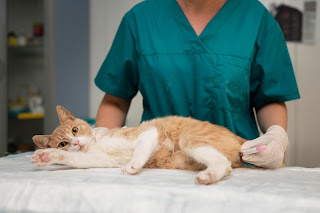
In the realm of animal rescue, heartwarming tales of resilience and determination have the power to inspire us like no other. This story revolves around a seemingly insurmountable challenge faced by a paralyzed cat and the remarkable transformation that transpired thanks to the power of Animal Communication. Through this extraordinary narrative, we gain insight into the capacity of animals to express their desires and the incredible outcomes that unfold when we truly listen. It all began when a paralyzed cat was brought to the attention of a dedicated rescue worker who had consistently demonstrated unwavering commitment to rehabilitating animals in dire conditions. The cat's prognosis seemed bleak, with a veterinarian advising that euthanasia might be the most compassionate course of action. At this crossroads, however, the cat's determination to live became a beacon of hope. The rescue worker is someone I've been working closely. She didn't have the heart to let the ca...